Friday, October 13, 2017

Levels of Anger


Since I've begun this year as our behavior interventionist, I have seen many of the students on my case load struggle to self regulate. This can then lead to them shutting down, becoming verbally and/or physically aggressive, threatening others, and engaging in power struggles. As a classroom teacher it can be incredibly hard when having to deal with these behaviors in the moment. Research shows that when kids are stressed, their amygdala is activated causing a flight, fight, or freeze response. Once this happens, it can take 30-90 minutes for them to calm back down for higher order thinking.

Yep. 30-90 minutes.  For some teachers, that can be an ENTIRE subject... or ENTIRE class period! (Interested in more brain research?? Google Eric Jensen. Seriously. Do it.)

As a preventative this year, I began reading up on the Incredible 5 Point Scale. This is something that can be used on a wide range of situations, but I chose to look at it through the lens of anger. I explained that different things can 'trigger' our anger. As this happens, we can move through different levels before we completely lose control of ourselves. Noticing these different levels can help regulate ourselves so that we calm down and not get in trouble. As we went through the different levels, we built the anchor chart below together.


Before the lesson I made sure to have emotions written on sentence strips, pictures drawn for visuals, colored papers written with the five levels, and a large thermometer drawn to give a concrete example of how anger can build up like temperature. This way we could piece together our chart and I didn't have to use time writing everything.

To apply the levels, I used Inside Out and the scene from the dinner table. I had students focus on the daughter, and had then identify as they saw her escalating through different levels of anger. We paid attention to how she LOOKED, what/how she SAID things, and inferred how she might FEEL. Here's the LINK to the video.

Students also have their own personal graphic organizer.


I did also have them circle triggers of their own, and checkmark ones that REALLY got them angry. I left room in the trigger box to add more that they may come up with on their own.

I found that during the mini lesson I focused more on an overview of the levels rather than students filling out their graphic organizer. That came on an individualized basis as situations arose where the student and teacher could analyze what was going on, what level the student was on, and how looked or felt. 

Let's say the situation was that the student began to kick chairs and yell loudly that he was going to throw one. After the student was out of the classroom and in a place to talk, the teacher would ask what happened. They would then ask what level they were on? In this case, that most likely is a 4 or 5. The teacher and student discuss how that LOOKS, SOUNDS, and FEELS. The teacher should also ask what else happened that led to the point of them throwing chairs. What were the triggers? What level was the student on at that point? Again the teacher asks how that LOOKS, SOUNDS, and FEELS. At first, some levels may be skipped until they are experienced. The second column that says count to 10 has ways the student can calm down at each level. I highly encourage students who are at a level 4 or 5 to take a break. A level 5 I explain how that can mean moving to a different room with an adult to be out of the situation. Here's an example of one filled out for a student. 


As students this year have begun to experience anger, this has been SUCH a helpful resource. Already this year I have been able to figure out what is causing students to escalate to a level 5, and how to help them BEFORE they get that far. Just recently I had a student tell me that another student was bothering them, which caused them to be at a level 3. This then caused them to poke at the teachers board, which led to a teacher redirect, which then led to them escalating to level 5. I was able to discuss with them how as SOON as they are bothered, they could STOP, count to 10, and then go sit away in safe zone BEFORE they got to a level 5.

I love being able to bring students in to look at the bulletin board and use it as a springboard for problem solving conversations. It's also been so helpful having students have their own individualized ones as well to continuously go back to and to identify strategies to help them calm down. Students are beginning to recognize their levels and verbalize what they need to do to calm themselves. While it is still a long process, this has been a great visual for self assessment and self regulation.

UPDATE: I'm adding in this as well.
This I created for students to carry. It takes the anger process a step further and helps students to know that once they've calmed down, they can solve the problem (the trigger) and/or receive consequences for it. Just another twist and a way to organize things!

Thursday, September 14, 2017

Proactive vs. Reactive


It's the beginning of the year and the honeymoon is REAL y'all! Things are jiving, behaviors are chill... but as the days go on... we start to hear talk that may resemble "STOP!" "Get out!" "You're so stupid!" "I can't do this".. etc, etc.

It's frustrating right? Especially after we've discussed school rules, created our own rules in the classroom, and have been working hard to build routines. Our school has 3 basic rules: Be safe, be respectful, and be responsible. They're great because so many things can fall into them.. but what about real life social skills?

If you've ever read or heard of the 7 habits of highly effective people, or the 7 habits of happy kids, you may know that the first habit is BE PROACTIVE. (For more info: The Leader in Me)

Get posters HERE.

So inspired by the first habit, one of the MOST important lessons I taught my students at the beginning of the year was the difference between being proactive and reactive. Short and sweet, proactive people are positive and solve/fix problems, while those who are reactive can be negative and make them worse.

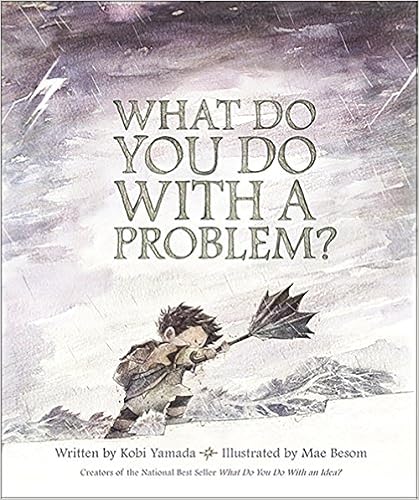
While there are a TON of great read alouds where characters engage in a problem, many times with it getting worse before it gets better, my all time favorite to read for this lesson is What do you do with a problem? by Kobi Yamada. It tells of a character who struggles with a problem which grows bigger as he tries to avoid and ignore it. When he finally decides to face it, the character learns a valuable lesson about problems.

While we read, we also fill out an anchor chart comparing what both words LOOK like, FEEL like, and SOUND like. While the boy does not SAY the words listed on the chart, I borrowed a few from different growth mindset bulletin boards I had seen around (HERE and HERE)

I'm always amazed at how much these words are used throughout the ENTIRE school year. Many of the different behaviors exhibited throughout the school day fall into either category, and I've found it so helpful to be able to use these words to classify what type of behavior it is. It also helps students self reflect and make connections back to What do you do with a problem?

If you're interested in reading about how I implemented this lesson in class, scroll down! I use a structured mini lesson format, which you can read more about HERE if you'd like a quick and dirty on how I've organized it! This lesson runs longer than typical mini lessons usually do since I'm reading the WHOLE book, but I've still structured it the same.


MINI LESSON: Proactive vs. Reactive (30 minutes)

Connection: Ask students if they've ever been in a fight before. Maybe with their friends? Their parents? Their siblings? Allow them 30 sec think time. Have them turn and talk with a partner for a minute. Call them back together and ask for 2-3 shares. (TWIST: Ask them to tell about what their PARTNER shared) I agreed with many of their stories and mentioned a little about how my brother and I always fought as kids. I tell them that we encounter many situations throughout the day, and it's important to think about the choices we can make.

Teaching Point: Today we are going to focus on these different choices and classify them into two categories. On the anchor chart I write proactive and reactive.

I ask students to look at these words. What do they notice? Are there are prefixes, suffixes, smaller words they see in them? (Great connection back to vocabulary and what to do when encountering words we may not know) We see both words have ACT, so these have something to do with how we act. IVE is a suffix that makes these an adjective which describes how we act. PRO is a prefix that means forward, so in PROACTIVE you are moving forward to find a solution. This is positive. When we are REACTIVE we react to something before we think through our choices! This can be negative and can land us in trouble. I'll draw a smiley face and a frowny face next to the words to help with visual.

Next I'll show them the book we read and set the purpose for them to pay attention to the main character and think about what they DO, what they SAY, and how they might FEEL in the story while dealing with their problem. The first page or two I read, and then I will think aloud showing students what I notice about the character. From there we will decide if that's proactive or reactive. I'll begin to list it by the eye I've drawn (what the character looks like/what they do), the ear (what they say/how they sound), and the heart (emotions). The beginning of the book shows a lot of reactivity, and as it goes on the character shifts into a proactive mindset.

Active Engagement: I'll keep reading here and have students partner talk and then help me list more on the anchor chart. Rich discussions and connections will ensue.

Link: Now that we've created an anchor chart, I give them a graphic organizer and have them think about how they can turn reactive problems into class into something proactive. I link it back to the work we have done and how the anchor chart can help them with ideas.

Independent Work: 


Closing: I'm a HUGE fan of exit tickets. (READ MORE ABOUT THEM HERE) Usually I'll give them a scenario that they have to quick write on to show how to be proactive or a scenario that a person can change from being reactive to proactive. You could even show a visual and have them use a T-chart to write about how the person is being proactive/reactive.


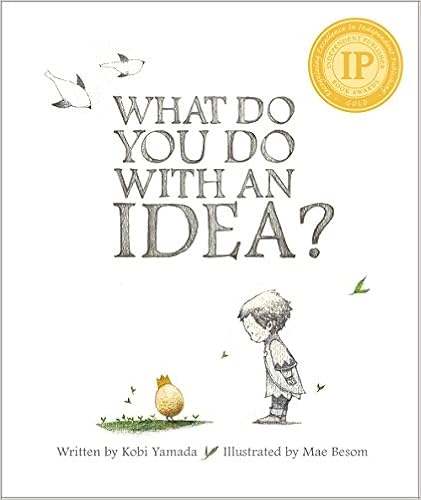
And if you liked What do you do with a Problem, and are feeling this whole growth mindset thing, check out this book, What do you do with an idea? It tells the story of what can happen to our ideas as our confidence grows.

Saturday, August 19, 2017

Exit Tickets and Self Assessment with Marzano


So we've all heard of Marzano yes? You know that vocabulary guy who has lots of research into best practices?


Well, one (out of MANY) ideas I've gotten from his books had to do with student self-assessment. I've loved the idea of having students be involved in goal setting and teacher conferences, so when I found another idea on allowing for student reflection, I jumped at it!

To assemble them, I grabbed two pieces of cardstock and cut one of the pieces shorter. On the shorter piece I made sure to glue the self assessment picture down, and then laminated both pieces of cardstock seperately I then placed the shorter piece on top of the larger piece, and used decorative duck tape to adhere them together by taping the sides and bottom. Voila. A pocket! I stapled them in order right next to the door so students could drop things in easily on their way out.


So, the idea here is that there are 4 levels of understanding. At the end of a lesson, I would have my students do an exit ticket or perhaps take their graphic organizer/work for the lesson, and place it in the folder that they felt matched where they were in their learning of the concept. They 4 areas they could choose from were:

Novice: This is where students were completely confused and had a lot of questions.

Apprentice: Students still needed help or partners with their work, but they had a basic understanding.

Proficient: Students understood the material and were able to work on their own although they may have a question.

Distinguished: Students got it and could teach it to others or get in front of the class and explain it in their own words.

At the end of the day, I was able to go through and check out not only students' work, but assess they're understanding of their learning. This led to great conversations of students who constantly rated themselves lower than what their work proved, as well as students who rated themselves much higher than their work proved. I used this with fifth graders, so since it was upper elementary, it was a great real world skill to teach!

This also plays right in to grade percentages too, but would be amazing for those of you doing standards based grading as well!

THINK:
69% or less: Novice
70%-79%: Apprentice
80%-89: Proficient
90%-100%: Distinguished

Interested in trying these out? Get them free here!

Thursday, July 27, 2017

Strengths Finder 2.0

Okay, who has heard of this book?

 Amazon- BUY IT!

It has literally blown my mind.

THE GIST: So many people are focused on their shortcomings and what needs to be fixed rather than focusing on their strengths and how to grow them. How many of us as teachers know we need to do this for our students? How many of us actually have this mentality for ourselves? How many of us know what exactly our strengths are and how to continue to strengthen them?

"You cannot be anything you want to be- but you can be lot more of who you already are."

Whoa right?

Part 1 of the book explains this quote in greater depth and describes this mindset. It also mentions that while you have these strengths, there may be a few that are your POTENTIAL strengths, and thus, need to be nurtured.

From there, you go online and take a 30 minute-ish quiz that asks you two different things you might do/say/feel and then you rate either neutral, or decide you are SLIGHTLY or STRONGLY more of one or the other. It's timed as it wants your first reaction rather than you analyzing it for a long time. Once it's over, it gives you a personalized report on your top 5 strengths. Now part 2 of the book goes into all 34 strengths you might have. (definitely don't read this before taking the quiz... I feel like it could sway you when answering). This report I read BEFORE part 2 as it's much more individualized for the person who took the quiz. Based on how you answered, the quiz is able to pull from that and give you specifics about your strength and how it applies to you. Even though people may have the same strengths, it's not the same for everyone. So the blanketed description in the book gets way more in depth with the report you're given online.


After reading through my report I WAS EMPOWERED. So much was said about teaching being a good vocation for me as well as attributes that will help me as I move out of the classroom and into the role of behavior interventionist. I was completely thrilled to see that so much of what I'm doing in my career falls within these strengths. I can also see how I need to build on them. For example input is in short, a hoarder of something. For me, it's information... books. So often I gain all this knowledge on subjects but don't see myself as an expert and don't take enough opportunities to output it. It's something I'm working on (especially with doing PD) and I really think next year will give me the chance to grow this.

I also saw so many of these strengths in me as a CHILD. The book mentioned that many times our strengths can be seen as early as 3 years old... and reflecting back to how I acted or what I chose as a kid, those up there? SPOT ON. Totally freaking cool.

(Speaking of hoarding... I was OBSESSED with Nancy Drew when I was a kid...)

I just.. I just can't even y'all. This book absolutely blew my mind. My friend who recommended it to me and I have gotten 4 of our friends to try it. It's definitely something I'm going to suggest to my admin team to do too.

I feel so much more in tune with me, and incredibly proud and confident of what I have to offer. I know there's room to grow, but it's such a positive thing to be able to focus on growing what you're good at, rather than always trying to fix the shortcomings.

Y'all do it. Get this book. And then, talk to me about it. I find it FASCINATING. And if you have already done it, well tell me about it! :)

Friday, July 14, 2017

Summertime and the living is GREAT!

Well after years (hey, only 4!), I've decided to give this a try again.

The biggest reason is that now that I have finished my DECADE... yep, 10, years of teaching, I have decided to take the first move out of the classroom and move in to becoming our behavior teacher at our school. I'll be the case manager for any students who are classified as a behavior and SPED student, and will provide social skills and other interventions for students who need extra support. I'm also excited to be given the opportunity to provide PD to our staff and to coach teachers this year on classroom management as well. After getting my masters in education, I knew that I'd be looking for something perhaps in administration, but I couldn't decide if I wanted to go more of a curriculum track or behavior track. I've had many opportunities in curriculum (well.. and behavior in the classroom), but now I have a chance to see what it would be to focus on behavior.

I'm not going to lie, I'm nervous! I know there will be really tough days, and self care is going to be EXTREMELY important. Plus giving up my current classroom, leaving my AMAZING fifth grade team, trying to figure out just WHERE my EPIC classroom library and various resources are going to go.... it's been a real emotional roller coaster. But I know that to grow I have to take on challenges outside of my comfort zone.

So here we go!

I've decided to resurrect this blog as a means to continue to post ideas on curriculum (because I CANNOT let that go), and to add ideas on classroom management, different ideas from the various classrooms I see, and life stories. Because let's be real... I'm sure to have A LOT next year as always!

I'm looking forward to getting back into the scene and can't wait to get to know y'all again!

And on that note, summer life is tough.. right?


Monday, August 12, 2013

Moving houses and classrooms makes for a busy summer!

So I promised myself I wouldn't suck at updating my blog.... but.... big surprise I did suck! I can't believe it's already been over a month! Which mean it's August! Which means school is around the bend! Like in 2 weeks! AHHH!

July was an absolute whirlwind of a change. The whole process of buying a house is emotional and stressful. Especially when you are selling one at the same time! Fate as it seems worked out however, and I landed this beauty:
The front yard has some really adorable landscaping, and GORGEOUS trees. One of the first things that made me fall in love with it.

 Here's a picture of the inside dining/living room/kitchen area. I never knew how much I would love a bar top! Just tonight I was able to cook dinner and watch Nashville... my new current obsession for a show! Super scandalous and filled with drama.

Dining area. If you look really close you can see one of my boys peeking through the back door!

 My room where Max decided to take a nap. As always!

 And my crafty/interior designer moment: No door for the bathroom? Easily fixed with a red curtain I found in a box! And can I just say that a shower with separate bath tub has been something I never realized I would love so much!

My little reading area part of the bedroom. Has so much space in here!

And here is what absolutely sold me. This backyard is beautiful. Awesome deck and 3 huge beautiful trees that shade the yard all throughout the day. I couldn't be happier here.

So now that you see what I've been spending July doing, tomorrow I'll reveal the classroom and what August has brought! Talk about a busy summer of packing and moving... at home and the job! But here's hoping to many exciting years in this house! :)

Monday, July 8, 2013

Small Group Organization with a Monday Made It to Boot!

A few days ago I posted about getting a schedule down for next year and figuring out times where I could meet with small groups for reading. As I have been reading this awesome book:

The next thing I decided to tackle this week was organizing! Last year I did something similar to what the sisters suggested and had a 'pensieve'.

I don't have a picture of mine as I left it at school, but it's similar to the picture above. Each child had their own pocket divider where I could put notecards and such, plus still have the ability to clip in papers too. I remember thinking how organized and ready to go I was at the beginning of the year. I mean my binder was colorful and had snazzy pockets, how could this go wrong right??

Well, if I could show you a picture of how HEAVY this thing was, how hard it was to lug around when conferring with students, and then taking it home each night to reorganize and go over notes? Yeah right! There was no way this baby could make it home with me. It took up every last inch of my teacher bag with just it in there ALONE and doing the one handed carry... well let's just say that it usually made it down to my car, but I can't really say it ever made it back out of there.

So after reading Debbie Diller's book, I decided to try something similar to the pensieve, but make it more manageable for me to take around. So instead of using a 2.5 or maybe 3 inch binder (yes, it was THAT enormous!!), I've decided to go back to the old 1 inch.

I sadly don't have my AWESOME pocket tabs, but wanted to take a picture to show you my thoughts. I'm planning on having no more than 5 groups, so will therefore use 5 pocket dividers. Diller mentioned that any more than that becomes hard to keep track of.


Behind each pocket divider will be lesson plans. I used Jan Richardson's lesson plan format from her book The Next Step in Guided Reading which differ based on student's reading level. Diller includes some of her own plans broken down by comprehension, fluency, vocab, phonics, and phonemic awareness. I haven't decided which to use, and perhaps it will just depend on the group.

Now behind the lesson plans, Diller suggested dividers that have each student's name on them. Here you can put their running records which the book suggested you do on notebook paper. Starting out each small group lesson, I want to take one running record on a student, while the others are reading at the table. What a quick and easy way to keep assessment ongoing, but not overwhelming! I'll get more into what I plan to do in small group in my next post though!

Now along with running records, I am hoping to take better notes of my students, especially when conferring with them one on one. I've tried sticky notes, labels, notecards, the awesome Daily 5 conferring sheet.. but I either lost these things or couldn't find them when I needed them. This year I am going to try notecards AGAIN but this time file them in those awesome pocket dividers. Then once they are filled up, Diller suggest putting them in one of these:

Now you have a mini file of notes on students! I'm really hoping this could be the answer for me.

Now the last thing I have included in the binder is my small group organization folder. Basically all I did was laminate two pieces of cardstock, taped on a piece of cute duck tape to hold the two together and voila! You've got yourself a homemade folder!


On the back I put the DIBELS scores for the beginning, middle, and end of second grade and correlating reading levels. 
 Hopefully this will be much more helpful than scouring through mountains of papers (usually in the recycling bin!) or asking my team leader for yet ANOTHER copy. I'm sure she'll be thankful to see this! (Click here to download the dibels table! Click here to download the reading levels!)

Now on the inside I glued 5 colored strips of paper (before laminating of course) to represent the 5 small reading groups.

The strips of white paper are an awesome resource Diller included in her book that shows you some things to work on at each different reading component. I plan on laminating these, and then velcroing them on to give me ideas for what this group needs to work on or what they have mastered. Easy to write on as well if they are laminated.

I'm also thinking about putting their names in those tabs you usually use for file folders. That way I won't have to laminate and can easily change names by slipping the paper in and out. I want to velcro these on there too, which will make it easy to move their names to different groups as the year goes on. Not sure if I will leave them that large, or cut them in half so I can fit more names on the folder.


I'm really excited to finally have MADE SOMETHING even though it is late Monday night- it still counts!! And I'm organized. Things are looking good! Also here's the the DIBELS table in grades 1-5 if you are interested in it!

Wednesday, July 3, 2013

Schedule (and getting my life together!!)

Is it just me, or is Debbie Diller a genius? I have absolutely LOVED her math workstations book, and it has completely transformed my math block. I posted a lot about that last summer and am feeling much better about how I do math. This summer, I sat down and wrote myself some goals on what I want to work on this summer. Reading has always been top of my list, specifically small groups. Enter this book:

Has anyone else ever wondered "What exactly am I suppose to be doing in small group?" or "How the eff do I differentiate for all these students and not go absolutely bananas?" or maybe even "Where have I put my small group books/lessons/word tiles/markers/small sticky note that has super important anecdotal notes about this child who I have a meeting on tomorrow? How have I lost them AGAIN? AHHHHH!" No? Maybe that's just a typical day in my life. I suck at organizing. Absolutely am a hot mess with a hot mess of a classroom. Every year I set goals to NOT be a hot mess.... so here's hoping this year is THE year!

So upon sitting down and trying to figure out my life, here were a few problem areas/goals I wanted to work on for next year:

  • Schedule - How in the world do I get everything in stick to it? And what is "EVERYTHING"?
  • How many groups can I really see in a day?
  • How can I infuse Daily 5/CAFE/Workstations altogether and make it work for me?
  • Can I do one on one conferring this year?
  • How do I hold them accountable for what they're working on in small group?
  • I NEED TO ORGANIZE AND STOP LOSING THINGS!!!
  • Readers Notebooks?!?! Say what?!?!

If I let it, I could probably keep this list going on and on and on some more. But basically, I came to the realization that I really needed to revamp my reading block and figure out what the eff I was doing. So this summer I am hoping to post about how I want to set up my entire English language arts block (writing included) and get some amazing feedback from y'all.

Now to tackle this huge enormous gigantic behemoth task, sitting down and figuring out a schedule was first on the list. So my teacher buddy came over yesterday and here is what her and I came up with:


CLICK HERE TO VIEW THE WHOLE THING

What are y'alls thoughts? I struggle so much with staying on time,  but I feel like breaking it down and making sure I cover all the components I need to will help me in the end. And of course flexibility will need to be remembered!! How do your schedules look?

Check back later in the week. Next up: Organizing Small Group

Tuesday, June 25, 2013

Dusting out the cobwebs

Wow, so when was the last time I posted? Almost a year ago? I definitely had such huge aspirations to keep this going during the year, but once school started, everything went out the window- as always! :) How do y'all do it?

Since it's been awhile, I was hoping to share some highlights from this year, school and personal!

1. I had 26 (27 at one time) wonderful 2nd graders this year. Quite a handful, especially having figured out I had 9 girls.... and 17 BOYS! Haha, talk about a class that kept you on your toes and always moving. One of the most fun groups I have had though.

2. I ran 10 miles (without stopping!!!) in under 2 hours in an awesome race called the Rock N Roll Austin 1020. While running you get to hear 20 bands play throughout the course. Huge feat that I actually was able to run that whole thing! Next goal for January: 13 miles in a half marathon!!

3.  And one of the most exciting things that happened this year was being named my school's Teacher of the Year. Such an honor to have your colleagues think that of you!


And getting a big check is just a cool experience in itself!

My district also took a short video of my class doing the Phonics Dance for a Teacher of the Year video. If you have no heard of the phonics dance, or haven't seen it you should! It's an absolute blast! You can see the video HERE. Just click on the video that says Amanda Wilkie under Baty Elementary. :)

If you're interested in more about the phonics dance, check out my post here about it, and the actual website here.

4. Lastly I am in the process of selling my house and buying a new one. I though buying was hard, but selling and buying at the SAME time?? Super stressful! The whole thing should be done by the end of July... but I am so ready to be done now! Keep your fingers crossed for me it works out!

I'm so excited to be back in the blogging world. I've miss y'all and hope some of my buddies from last summer still remember me! :) My biggest goal: not letting this baby grow cobwebs again :)

Hope y'all are having a wonderful summer. Can't wait to see what everyone is up to, and read about all the wonderful ideas this blogging community provides.

Follow on Bloglovin

Sunday, August 26, 2012

Bucket of Positivity for the First Day!

Well it is officially the first day of school tomorrow! I've been planning ALL month.. and for some reason I still feel like I'm not ready for the first day! How is that even possible? Regardless, I am excited! I got to meet quite a few cuties at our Meet the Teacher on Friday. It's adorable how shy they are!

So with the first day coming up, I decided to make my 2nd grade team some Buckets of Positivity! We've been hit hard with lots of trainings and data discussions this past week, and I know we could use a pick me up. Everyone is feeling the pressure this year and isn't quite sure how we're going to get them where we're being told they need to be by the end of the year.

ENTER BUCKETS OF POSITIVITY


A closer peek inside:

The pink card says:

Bucket of Positivity
*to help with the first week!*

Pencils to write encouraging words
Stickers that sing your praises
Fish to 'hook' great ideas
Kit kats to remind yourself to take a break
Hugs to remember you are LOVED!

Have a great first week!!

I cannot wait to give them out tomorrow! I also found some other cutsie things like the plastic microphone that opens into a bubble wand! Too cool! I am definitely going to use this for my fluency friday I plan on doing this year! :)

Hope y'all have a great Monday!