Showing posts with label classroom management. Show all posts

Friday, October 13, 2017

Levels of Anger


Since I've begun this year as our behavior interventionist, I have seen many of the students on my case load struggle to self regulate. This can then lead to them shutting down, becoming verbally and/or physically aggressive, threatening others, and engaging in power struggles. As a classroom teacher it can be incredibly hard when having to deal with these behaviors in the moment. Research shows that when kids are stressed, their amygdala is activated causing a flight, fight, or freeze response. Once this happens, it can take 30-90 minutes for them to calm back down for higher order thinking.

Yep. 30-90 minutes.  For some teachers, that can be an ENTIRE subject... or ENTIRE class period! (Interested in more brain research?? Google Eric Jensen. Seriously. Do it.)

As a preventative this year, I began reading up on the Incredible 5 Point Scale. This is something that can be used on a wide range of situations, but I chose to look at it through the lens of anger. I explained that different things can 'trigger' our anger. As this happens, we can move through different levels before we completely lose control of ourselves. Noticing these different levels can help regulate ourselves so that we calm down and not get in trouble. As we went through the different levels, we built the anchor chart below together.


Before the lesson I made sure to have emotions written on sentence strips, pictures drawn for visuals, colored papers written with the five levels, and a large thermometer drawn to give a concrete example of how anger can build up like temperature. This way we could piece together our chart and I didn't have to use time writing everything.

To apply the levels, I used Inside Out and the scene from the dinner table. I had students focus on the daughter, and had then identify as they saw her escalating through different levels of anger. We paid attention to how she LOOKED, what/how she SAID things, and inferred how she might FEEL. Here's the LINK to the video.

Students also have their own personal graphic organizer.


I did also have them circle triggers of their own, and checkmark ones that REALLY got them angry. I left room in the trigger box to add more that they may come up with on their own.

I found that during the mini lesson I focused more on an overview of the levels rather than students filling out their graphic organizer. That came on an individualized basis as situations arose where the student and teacher could analyze what was going on, what level the student was on, and how looked or felt. 

Let's say the situation was that the student began to kick chairs and yell loudly that he was going to throw one. After the student was out of the classroom and in a place to talk, the teacher would ask what happened. They would then ask what level they were on? In this case, that most likely is a 4 or 5. The teacher and student discuss how that LOOKS, SOUNDS, and FEELS. The teacher should also ask what else happened that led to the point of them throwing chairs. What were the triggers? What level was the student on at that point? Again the teacher asks how that LOOKS, SOUNDS, and FEELS. At first, some levels may be skipped until they are experienced. The second column that says count to 10 has ways the student can calm down at each level. I highly encourage students who are at a level 4 or 5 to take a break. A level 5 I explain how that can mean moving to a different room with an adult to be out of the situation. Here's an example of one filled out for a student. 


As students this year have begun to experience anger, this has been SUCH a helpful resource. Already this year I have been able to figure out what is causing students to escalate to a level 5, and how to help them BEFORE they get that far. Just recently I had a student tell me that another student was bothering them, which caused them to be at a level 3. This then caused them to poke at the teachers board, which led to a teacher redirect, which then led to them escalating to level 5. I was able to discuss with them how as SOON as they are bothered, they could STOP, count to 10, and then go sit away in safe zone BEFORE they got to a level 5.

I love being able to bring students in to look at the bulletin board and use it as a springboard for problem solving conversations. It's also been so helpful having students have their own individualized ones as well to continuously go back to and to identify strategies to help them calm down. Students are beginning to recognize their levels and verbalize what they need to do to calm themselves. While it is still a long process, this has been a great visual for self assessment and self regulation.

UPDATE: I'm adding in this as well.
This I created for students to carry. It takes the anger process a step further and helps students to know that once they've calmed down, they can solve the problem (the trigger) and/or receive consequences for it. Just another twist and a way to organize things!

Thursday, September 14, 2017

Proactive vs. Reactive


It's the beginning of the year and the honeymoon is REAL y'all! Things are jiving, behaviors are chill... but as the days go on... we start to hear talk that may resemble "STOP!" "Get out!" "You're so stupid!" "I can't do this".. etc, etc.

It's frustrating right? Especially after we've discussed school rules, created our own rules in the classroom, and have been working hard to build routines. Our school has 3 basic rules: Be safe, be respectful, and be responsible. They're great because so many things can fall into them.. but what about real life social skills?

If you've ever read or heard of the 7 habits of highly effective people, or the 7 habits of happy kids, you may know that the first habit is BE PROACTIVE. (For more info: The Leader in Me)

Get posters HERE.

So inspired by the first habit, one of the MOST important lessons I taught my students at the beginning of the year was the difference between being proactive and reactive. Short and sweet, proactive people are positive and solve/fix problems, while those who are reactive can be negative and make them worse.

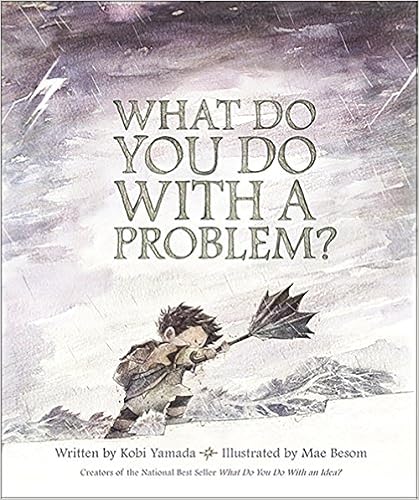
While there are a TON of great read alouds where characters engage in a problem, many times with it getting worse before it gets better, my all time favorite to read for this lesson is What do you do with a problem? by Kobi Yamada. It tells of a character who struggles with a problem which grows bigger as he tries to avoid and ignore it. When he finally decides to face it, the character learns a valuable lesson about problems.

While we read, we also fill out an anchor chart comparing what both words LOOK like, FEEL like, and SOUND like. While the boy does not SAY the words listed on the chart, I borrowed a few from different growth mindset bulletin boards I had seen around (HERE and HERE)

I'm always amazed at how much these words are used throughout the ENTIRE school year. Many of the different behaviors exhibited throughout the school day fall into either category, and I've found it so helpful to be able to use these words to classify what type of behavior it is. It also helps students self reflect and make connections back to What do you do with a problem?

If you're interested in reading about how I implemented this lesson in class, scroll down! I use a structured mini lesson format, which you can read more about HERE if you'd like a quick and dirty on how I've organized it! This lesson runs longer than typical mini lessons usually do since I'm reading the WHOLE book, but I've still structured it the same.


MINI LESSON: Proactive vs. Reactive (30 minutes)

Connection: Ask students if they've ever been in a fight before. Maybe with their friends? Their parents? Their siblings? Allow them 30 sec think time. Have them turn and talk with a partner for a minute. Call them back together and ask for 2-3 shares. (TWIST: Ask them to tell about what their PARTNER shared) I agreed with many of their stories and mentioned a little about how my brother and I always fought as kids. I tell them that we encounter many situations throughout the day, and it's important to think about the choices we can make.

Teaching Point: Today we are going to focus on these different choices and classify them into two categories. On the anchor chart I write proactive and reactive.

I ask students to look at these words. What do they notice? Are there are prefixes, suffixes, smaller words they see in them? (Great connection back to vocabulary and what to do when encountering words we may not know) We see both words have ACT, so these have something to do with how we act. IVE is a suffix that makes these an adjective which describes how we act. PRO is a prefix that means forward, so in PROACTIVE you are moving forward to find a solution. This is positive. When we are REACTIVE we react to something before we think through our choices! This can be negative and can land us in trouble. I'll draw a smiley face and a frowny face next to the words to help with visual.

Next I'll show them the book we read and set the purpose for them to pay attention to the main character and think about what they DO, what they SAY, and how they might FEEL in the story while dealing with their problem. The first page or two I read, and then I will think aloud showing students what I notice about the character. From there we will decide if that's proactive or reactive. I'll begin to list it by the eye I've drawn (what the character looks like/what they do), the ear (what they say/how they sound), and the heart (emotions). The beginning of the book shows a lot of reactivity, and as it goes on the character shifts into a proactive mindset.

Active Engagement: I'll keep reading here and have students partner talk and then help me list more on the anchor chart. Rich discussions and connections will ensue.

Link: Now that we've created an anchor chart, I give them a graphic organizer and have them think about how they can turn reactive problems into class into something proactive. I link it back to the work we have done and how the anchor chart can help them with ideas.

Independent Work: 


Closing: I'm a HUGE fan of exit tickets. (READ MORE ABOUT THEM HERE) Usually I'll give them a scenario that they have to quick write on to show how to be proactive or a scenario that a person can change from being reactive to proactive. You could even show a visual and have them use a T-chart to write about how the person is being proactive/reactive.


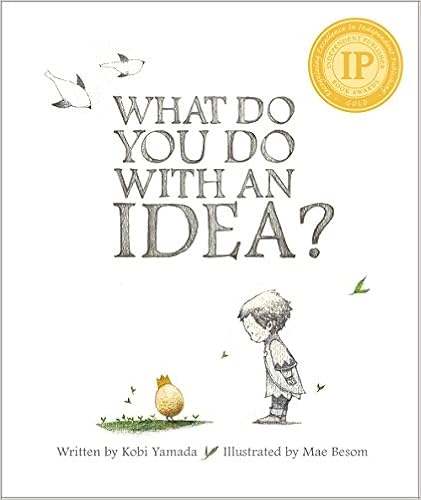
And if you liked What do you do with a Problem, and are feeling this whole growth mindset thing, check out this book, What do you do with an idea? It tells the story of what can happen to our ideas as our confidence grows.

Saturday, July 14, 2012

Morning Meetings and Compliment Box

Y'all can I tell you how productive I was yesterday!?!? I worked on lesson planning, morning meeting stuff, and tons of Monday Made It things. Today you ask? Well... not AS productive, but I did take my big man to get his nails clipped. He screamed like a Chihuahua, but is looking good.. and resting. Rough day!

Such a handsome guy! Ok... on to my thoughts on morning meetings.

I did these a little bit this year, but didn't commit or make the most of them. Sometimes they would go on WAY too long, and other times there was no plan to them and thus ineffective as a morning meeting.

Yesterday I spent pretty much the WHOLE day dedicated to researching and putting together some resources I can use during morning meeting. Here's what I am planning on doing.

MORNING MEETING SCHEDULE:
1. Greeting
2. Lightning This That (name still in the works)
3. Announcements/Compliment Box
4. Activity
5. Morning Message

which will all lead into:

Body Break
Poem of the Week (another post coming on this soon, I'm super excited to try this out this year!!)
Body Break
Read Aloud
Writing

GREETING
I'm sure you've seen the awesome Mrs. Bainbridge's morning meeting page right? Well she has some amazing cards there that have directions for all sorts of greetings. 40 I believe.


I cut them out and put them on a ring. She mentioned that she starts the year with learning how to shake hands and give eye contact. I love that. I am really big on my students giving eye contact (and let's be honest, that can be hard for adults to do too!)

LIGHTNING THIS THAT
At a character education training I went to last year, our trainer mentioned that during morning meetings she would ask students a quick question everyday. Something like "Do you prefer rain, sun, neither or both. Going around the circle students would quickly give their answer only. It takes a minute or so and is fun to do! It's interesting to see how students answer.

Now if a student didn't have an answer right away, I would skip over them. I'd always come back to them at the end after they've had some time to think. 

 ANNOUNCEMENTS AND COMPLIMENT BOX
Here I figure I can go over the schedule, upcoming dates for important events, and any other changes that may be going on for that day. I was also thinking I could do my compliments here!

In my room we do a compliment box. I'm wondering if this might be a good place to put this? I love to pull at least 2 every day.


During the beginning of the year we discuss a lot of character traits, then post them on the word wall in a different color than HFW and vocab words. To alleviate the "you have pretty shoes" or "I like your hair" compliments, I model quality compliments and really praise students who use our character education words. We use sentence stems such as: "Ms. Wilkie showed integrity when she picked up trash on the floor and no one asked." or "Ms. Wilkie showed perseverance in writing when she worked the whole time." Then they put their name on it and drop it in the box. Students can make these during the Daily 5 work on writing, can do it during morning work, at the end of the day, or during any free time.

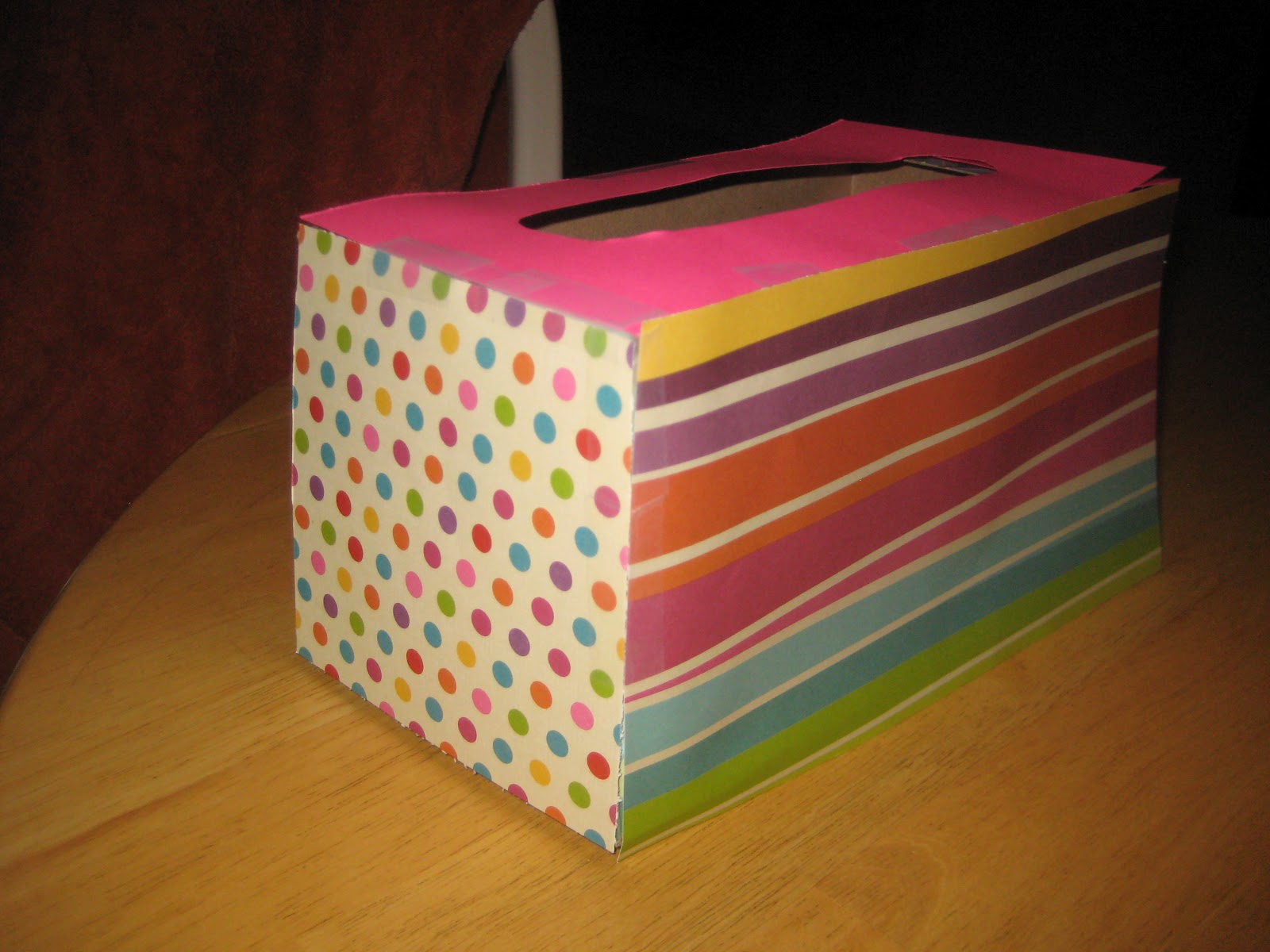
Basically it's just a Kleenex box

That I put scrapbook paper on! I'm planning on taping it all up with packing tape, so that way it's like it was laminated and all those edges sticking up will stay down. Plus it won't get mucked up with all those many hands on it!

Kids then write compliments on strips of paper, and put their name on the back.

When we pick a compliment out of the box, I read it to the class and we all clap. Then the student who received the compliment looks the person in the eye who gave it to them and tells them thank you (in what ever language we have learned that week). That person then responds with you're welcome.

The person who received the compliment comes up to the front, and using this little mini stapler, I staple it around their wrist.

So it looks like this!

The kids love it! We do it all throughout the day. I especially love giving them out when they're in line- but only when they are quiet and showing the BEST line behavior. What a positive way to start out the day AND the rest of the day! It's especially awesome when students come whisper to me about the compliments they've made others or are going to make.

ACTIVITY

What a great time to bond and have fun! I've read about so many quick games online, and always wondered when there was time to do one. Now I have an allotted time! Again there was a ton at Mrs. Bainbridge's site.

I printed a few that I thought would work for me and put them on red cardstock. These are more silly/fun songs and team building games. Then I found some quick math and reading games/review which I put on blue and yellow cardstock. My plan is to do this:


MondaySilly (red)
TuesdayMath (blue)
WednesdayMad Lib
ThursdayReading/Word Work (yellow)
FridaySilly (red)


MORNING MESSAGE
I feel like I need to do some more research on this. I'm thinking of writing a letter to the class each morning on something special that may be happening, or something that we're learning about. My AP suggested we take a few minutes to work on grammar skills, so I was thinking this might be a great place to address some misspelling of HFW and missing punctuation.

This place has a really great schedule for how they do their message. Click the picture to see it!

And during all of this thinking, making, and walking all over the house, here's my little shadow, Max, who was with me through it all.


He's such a great helper!

Oh and Denise at Yearn for Learning is having a give away for hot dots! Yeah! ANNND Teacher-iffic. And Casey at Second Grade Math Maniac!


What do y'all do for morning meetings? Do you have a favorite part of morning meeting or a favorite activity? Please share! :)Ba sically where we go over the schedule, talk about any due dates or upcoming events. Might be a place to address  behavior problems that have been going on in the class as well.

Monday, July 2, 2012

Monday Made It Classroom Jobs

Okay before I start this post, can I just tell you how productive I feel today?!?
  1. 2nd day of bootcamp - hello summer body!
  2. Took dogs on a long walk.
  3. Pulled weeds in the front yard.
  4. Completed my Monday Made It!
And it's only noon! For me, this is a mighty accomplishment! Although now I have a heating pad on my lower back because I think I might have pulled something? Hopefully not. I have a lot more bootcamp left to do!

On to my Monday Made It. I was inspired by one of my pins:

I bought all of my supplies BEFORE I went ahead with my safari theme for next year's classroom, but I think it will still work. I've always had my job board called Helping Hands so I thought this was too cute NOT to make.

First I bought 12x12 scrapbook paper from Hobby Lobby, and cut it into 6 pieces. The pieces are 6 x 4 inches. You can get 6 pieces out 1 scrapbook page.

Then I added clipart and the job title, printed it out and glued it to all the different patterned papers.

To make it easy to change the little hands, I bought this Velcro at Lowes.

Then I attached the Velcro to the paper, and the back of the hands. It turned out like this:

Feel free to save this hand outline and use it! I actually drew this myself! How I love Paint Shop Pro. :)


I'm excited to post these up in my room! Last year I was using index cards taped to my cabinets, and they were forever falling off. Super annoying.

I would love to post the little clipart, but I have found them from various places on the internet, and don't know about copyright and all that with them. I've had the same clipart for about 5 years now and have NO CLUE where they came from.


In my room EVERY student has a job. We do a classroom economy. It is hands down, my favorite management tool and valuable teaching. If there was one thing I would suggest to new teachers- it would be this! Here's a list of some things we do:
  • Each student applies for a job every 2-3 weeks. (You can make it longer if you like!) Their application must be neat and in complete sentences. I'll share my applications when my computer is back up and running.
  • We create class money at the beginning of each year. We vote on the design. I copy 1s 5s and 10s. Money is given out for participation, great answers, great behavior, jobs done- anything really.
  • We create a bonuses chart (where students can earn money) and taxes chart (where students pay ME money). As a class we decide on the prices as well.
  • Each student has a tax chart (which I'll share later too). At the end of the day they add up their tally marks and place the money on top of their chart. The tax collector signs off on the day that taxes were paid and brings me the money.
  • We have a class store where students can buy things. I don't do a treasure box, this takes its place. Students have to count their money to make sure they have enough to buy stuff. Most of the things I have for sale aren't items. Sure I have pencils and erasers, but we do more classroom rewards. Like teacher's desk for a day, shoes off, lunch with teacher, 10 min computer time, free homework pass, 10 min class pet time, choose first at stations for the day, pillow for the day, stuffed buddy for the day, etc.
  • I use to have a banker/cashier when I taught 5th grade, but I found it a little hard for my 2nd graders this year. Maybe I'll tackle it again this year when I am more organized. Anyone else have advice on this?
If any of you are interested, I'll try to make a post going more in depth when I get back into my classroom so I can take pictures. :) I LOVE CLASSROOM ECONOMIES!

Do you have any classroom jobs that you love and couldn't live without? Any favorites you do with a classroom economy?

And don't forget to view my post about the Safari Clip Chart I made! I left a link for you to download it for free on my post!!

Sunday, July 1, 2012

Safari Clip Chart Freebie

Earlier this week I had posted a clip chart for my Monday Made It. Well I just put it together today and am thrilled with how it turned out!

 Here's the long version of the whole thing. I tried to keep it color coordinated with the animal prints. From pink all the way down to red.


 Here is a close up of the chart.

Here is a closeup of the middle. I have put little safari hats on the end of my clips with numbers on them. That way students (who always have a number in my room) can move their clip easily.

At the end of every day, I plan on having my teacher's assistant (student classroom job) keep track on a behavior chart of where each student was. This will be kept in a binder. They will use markers (corresponding with the color on the chart) and place a colored dot next to the students number. This will be a great tool to use for conferences or any meetings I may have about the student.


I have put it in my TPT store, for free if you are interested in downloading it! Just let me know what you think :) I appreciate it! It's my first actual made by me item! And I found out that you can turn power points into PDF files, who knew?!?!

And I'm linking up with Kreative in Kinder for some awesome blog hopping freebies!


Follow for Freebies

Monday, June 25, 2012

Monday Made It Behavior Chart


One thing I can check off my to do list: Behavior Clip Chart Safari Jungle Theme! I have loved seeing the pins for different ways to go about it. A few of my favorites and inspiration:

The Original, click the picture to go read more about this amazing chart and how to implement it!

Pirate - Rock N Roll - Superhero


And here's a preview of what mine looks like!
I'm planning on putting little safari hats with numbers on the sides of the clips. Can't wait to put it together when I am back home on Wednesday. I'll definitely post with updates on how it turned out! :) I'd also like to share it.. but am nervous with all the copyright scariness! The borders and people were drawn by me.. the clipart from microsoft office. Any advice?


Monday, June 18, 2012

Thank You! You're Welcome!!! Monday Made It!

Yea, I actually made something today! :) So I'm linking up (and promptly pinning all the new things others made today!)


Before my student teaching, I interned in a 5th grade classroom for 8 weeks. The first day there, my cooperating teacher asked me to pass out multiplication tests. As I handed one to the first student, they said thank you. Surprised, I answered you're welcome. I turned to the next student. Again I received a thank you when handing them the paper. As I moved on to each student, I received a thank you from EVERY SINGLE one. I was astounded! When I commented how polite of a class she had, she told me she worked hard to instill manners and good habits in her students. She even mentioned how it carried over to when they had substitutes! I knew that day that this was something I absolutely wanted to practice in a classroom of my own.

It is now my sixth year of teaching, and I take the time every year to teach my students to say thank you when someone opens a door for them, hands them a paper, picks something up for them, gives them something, etc. It takes a lot of practice at the beginning, but is absolutely worth it! I'll never forget how each and EVERY one of my students (with NO prompting from me) told a custodian who held a door open for them "thank you". Brought the most enormous smile to my face.

To keep it interesting however, I teach them how to say thank you and you're welcome in a NEW language every week or two. It's a great way to introduce and show them the countries where the language is used and how it is written. It's also perfect for students who use a different language at home because then THEY can teach us how to say them! What a fun way to build culture!

A problem I found this year though was that I wasn't keeping a record of words we learned. After seeing this on pinterest:


I decided this would be AWESOME to keep track of thank yous and you're welcomes:


I just spent all afternoon creating a spreadsheet that has the country, language, thank you, you're welcome, and translation to English.

I am HOPING they are correct. I tried to look on more than one website for translations. If you see something that is incorrect, please let me know so that I can fix it. You can find the SPREADSHEET HERE.

Here are a few ways we use our thank you's in the classroom:

DOOR HOLDERS (LINE PATROL)
One of my classroom jobs is having a line patrol. They help keep the line quiet and orderly, while also opening any door we encounter. Once they have opened it, each student is expected to give eye contact to the person and tell them thank you. The line patrol will respond with a thank you while looking them in the eye as well. I am super big on eye contact when students are talking to others.

PAPER PASSER
Another of our classroom jobs is a paper passer. Students are to tell them thank you (eye contact again) and the paper passer responds with you're welcome (eye contact too!)

PARTNER ACTIVITIES
During class we do so many partner activities. I expect them using thank yous when playing games, doing work together, or anything that might warrant a thank you! At the beginning of the year we role play A LOT so students get really good at getting in the habit of using it! :)

LUNCH
Each of our students are expected to voice what they would like to the lunch workers. Upon receiving their lunch, I expect them to say thank you for what the get. It's also fun because then the staff gets to hear thank yous in different languages too!!

Those are just a few places I specifically TEACH them to use their manners. Can you think of any other places you might encourage a thank you?

Oh and I'm off to Laughlin, Nevada tomorrow for boating, swimming, tanning, and gambling with the fam! Here's hoping I don't get too sunburnt.. although coming from a redhead... that's basically impossible! :)